
Overview:
A little more than one hundred and fifty years since their abolition as a social class, the samurai warriors of premodern Japan survive today as an immediately recognizable, truly global icon. The samurai are an important element of popular culture both produced and consumed not only in Japan, but around the world. These developments do not simply reflect the recent globalization and commodification of an ancient and purely Japanese tradition. Instead, from their very origins, the samurai were influenced by developments beyond Japan’s borders, especially China and Korea, and later Europe and many other parts of the world. The evolution of the samurai has always been influenced by external factors, and the samurai have in turn had a dramatic effect on views of Japan in other societies.
This project is based on the argument that the emergence of the samurai as a global icon in the twentieth century is directly related to the fact that the development of the samurai image was not “purely” Japanese, but was heavily influenced by, and in dialogue with, views of the samurai and Japan in other countries. From a very early stage, the samurai were taking on elements from other societies and cultures, or defining themselves against them in constructing their identities. From the late nineteenth century onward, the samurai were increasingly identified with Japanese society as a whole and have become a global icon in a way that few other regional or national figures have matched.
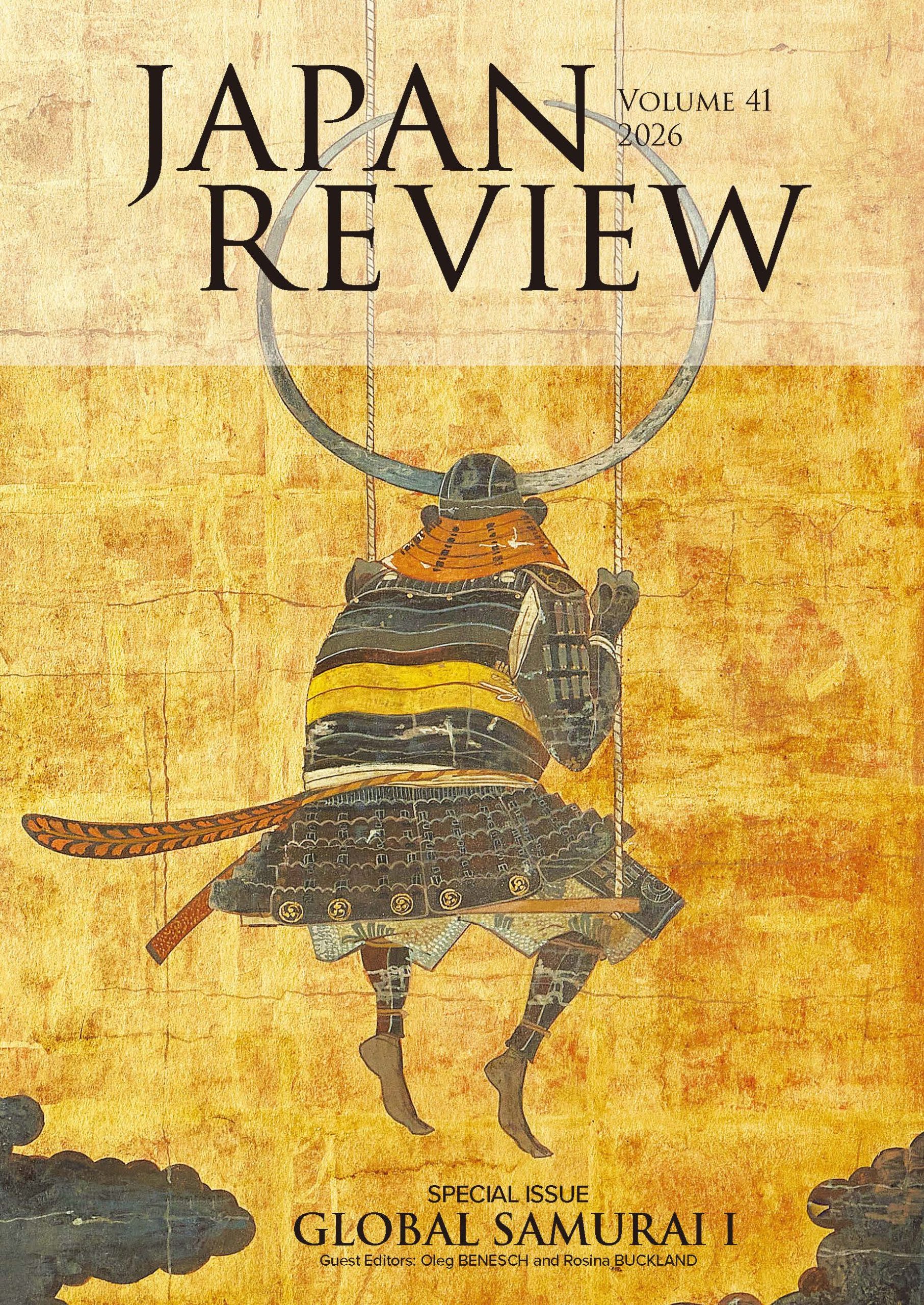
The Global Samurai research project has been closely related to the major Samurai exhibition at the British Museum in 2026. The project involves more than two dozen scholars from around the world, many of whom contributed to the exhibition book Samurai (British Museum Press, 2026). Many others have contributed to two special issues of Japan Review, titled Global Samurai I and Global Samurai II. The first special issue was published in early 2026, and the second will appear in 2027. Both will be fully open access online.
Articles in Global Samurai I:
Benesch, Oleg, and Rosina Buckland. “Global Samurai: Japan’s Warriors across Time and Space.” Japan Review 41 (2026): 5–30.
Clements, Rebekah. “Hunting and Samurai Authority in Korea during the Imjin War of 1592–1598.” Japan Review 41 (2026): 31–56.
Pitelka, Morgan. “Deifying Warlords: Mythologizing Samurai Leaders in Early Modern and Modern Japan.” Japan Review 41 (2026): 57–82.
Tremml-Werner, Birgit. “Samurai in Southeast Asia: The Lives and Afterlives of Takayama Ukon and Yamada Nagamasa.” Japan Review 41 (2026): 83–106.
Saaler, Sven. “‘The Supreme Command of Our Forces Is in Our Hands’: Restoring Imperial Authority and the Vilification of the Samurai.” Japan Review 41 (2026): 107–36.
Nagahara, Hiromu. “Engineering Elites: The First Japanese MIT Students as Samurai.” Japan Review 41 (2026): 137–64.
Thal, Sarah. “Steadfast Resolve: Stoicism, the Way of the Samurai, and the Struggle over Japan’s National Character.” Japan Review 41 (2026): 165–88.
Tonooka, Chika. “What Time Are the Samurai? Visions of Modernity in Twentieth-Century Britain.” Japan Review 41 (2026): 189–210.
Framke, Maria. “Discussing Caste, Independence, and the Nation: Avatars and Omissions of the Samurai in Colonial South Asia.” Japan Review 41 (2026): 211–32.
Panzer, Sarah. “Honor and Loyalty: Staging Chūshingura in Nazi Germany.” Japan Review 41 (2026): 233–54.
Monserrati, Michele. “The Transnational Samurai: Nation-Building and Community for the Italian Far-Right.” Japan Review 41 (2026): 255–80.
Related Publications:
There are also been a number of other publications that are relevant to the Global Samurai theme, and have been influential in the conceptualization of this project.
Holmes, Colin and A.H. Ion. “Bushido and the Samurai: Images in British Public Opinion, 1894-1914” Modern Asian Studies,14:2 (1980): 309-329.
Goodman, Grant K. “Philippine Bushido” in John Howes, ed. Nitobe Inazo: Japan’s Bridge across the Pacific. Boulder: Westview Press, 1995: 119-132.
Beeby, Allison and Maria Teresa Rodriguez. “Millan-Astray’s Translation of Nitobe’s Bushido: The Soul of Japan,” Meta: Translator’s Journal 54:2 (2009): 218-232.
Benesch, Oleg. “Wang Yangming and Bushidō: Japanese Nativization and its Influences in Modern China” Journal of Chinese Philosophy Vol. 36, No. 3, (Fall 2009): 439-454.
Benesch, Oleg. “The Samurai Next Door: Chinese Examinations of the Japanese Martial Spirit,” Extrême-Orient Extrême-Occident No. 38 (Jan. 2015): 129-168.
Benesch, Oleg. “Reconsidering Zen, Samurai, and the Martial Arts,” The Asia-Pacific Journal, Vol. 14, Issue 17, No. 7 (Sept. 1, 2016): 1-22.
Tonooka, Chika. “Reverse Emulation and the Cult of Japanese Efficiency in Edwardian Britain,” The Historical Journal 60:1 (March 2017) pp. 95–119.
Monserrati, Michele. “Fascist Samurais: the Japanese Race in the Italian Imaginary During the Second World War and Beyond.” Modern Italy, 25:1 (2020), pp. 63-77.
Panzer, Sarah. ‘Death-Defying: Voluntary Death as Honorable Ideal in the German-Japanese Alliance’. Central European History 55, no. 2 (2022): 205–22.